Blake Müller · 11 October 2026
Workshops Equip Cedar Hill Locals with Tools to Spot Invasive Threats in Wooded Areas
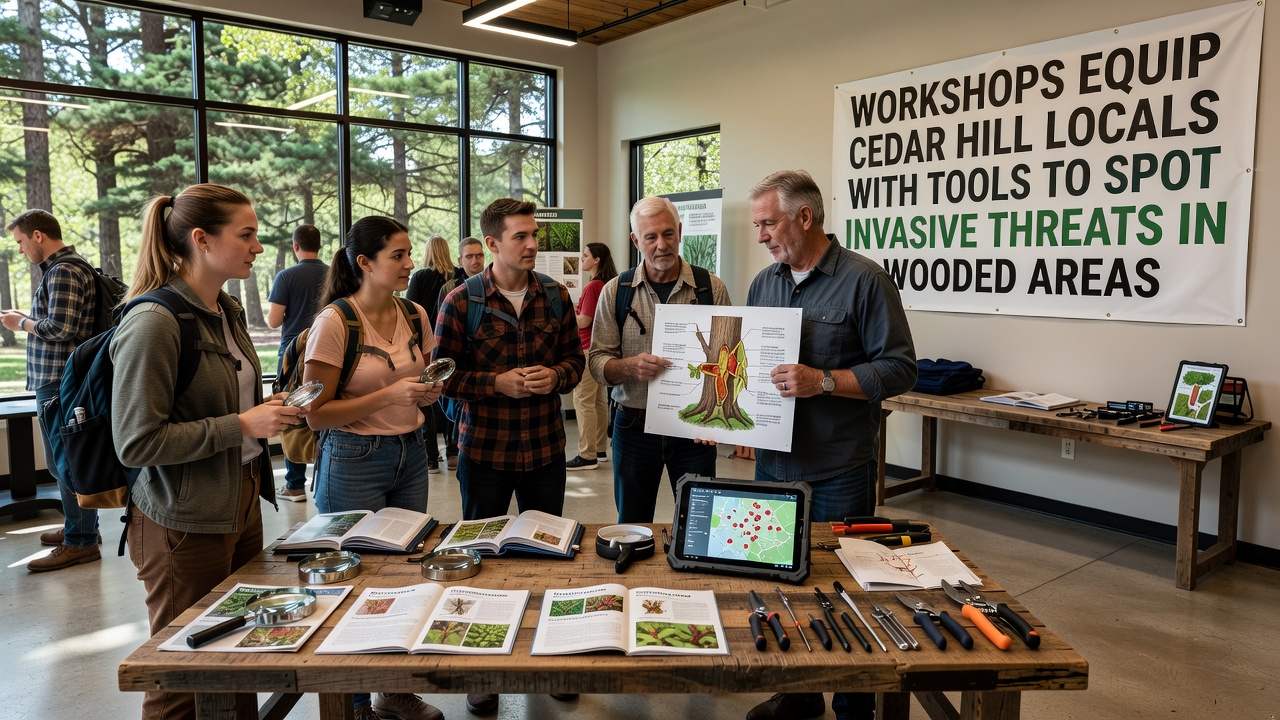
Local environmental groups in Cedar Hill have rolled out a series of hands-on workshops designed to train residents in early detection of invasive species that threaten wooded zones. These sessions combine field demonstrations with classroom instruction, and they focus on practical identification techniques for both plant and insect threats that can alter forest composition over time. The workshops address specific regional concerns around species that spread rapidly and outcompete native vegetation. Trainers present examples of common invasives such as Japanese stiltgrass, tree-of-heaven, and the emerald ash borer, while participants learn to recognize distinctive leaf patterns, bark damage, and growth habits that signal their presence. Sessions run for three hours each and include guided walks along established trails where attendees practice spotting signs without disturbing the habitat.Core Training Components
Each workshop divides its content into modules that cover visual identification, reporting protocols, and basic containment methods. Participants receive printed field guides and access to a mobile app that logs sightings with GPS coordinates. Instructors emphasize accurate documentation because misidentification can lead to unnecessary removal efforts that affect beneficial plants. Data collected during these sessions feeds into a shared database maintained by the Cedar Hill Parks Department, which tracks distribution patterns across multiple seasons.
October 2026 marks the start of an expanded schedule, with additional evening sessions added to accommodate working residents. Registration opens through the city website, and spots fill quickly because demand has grown since the first pilot program in 2024. Organizers coordinate with regional experts who bring specimens and high-resolution photographs to illustrate subtle differences between invasive and native lookalikes.
Species of Concern in Local Woodlands
Research from the United States Department of Agriculture highlights how certain invasives alter soil chemistry and reduce biodiversity in eastern deciduous forests, a category that includes Cedar Hill's wooded areas. Trainers reference these findings when explaining why early detection matters for long-term forest health. Attendees also learn about the life cycles of target species so they can time their observations to periods when signs are most visible, such as during spring leaf-out or fall seed production.
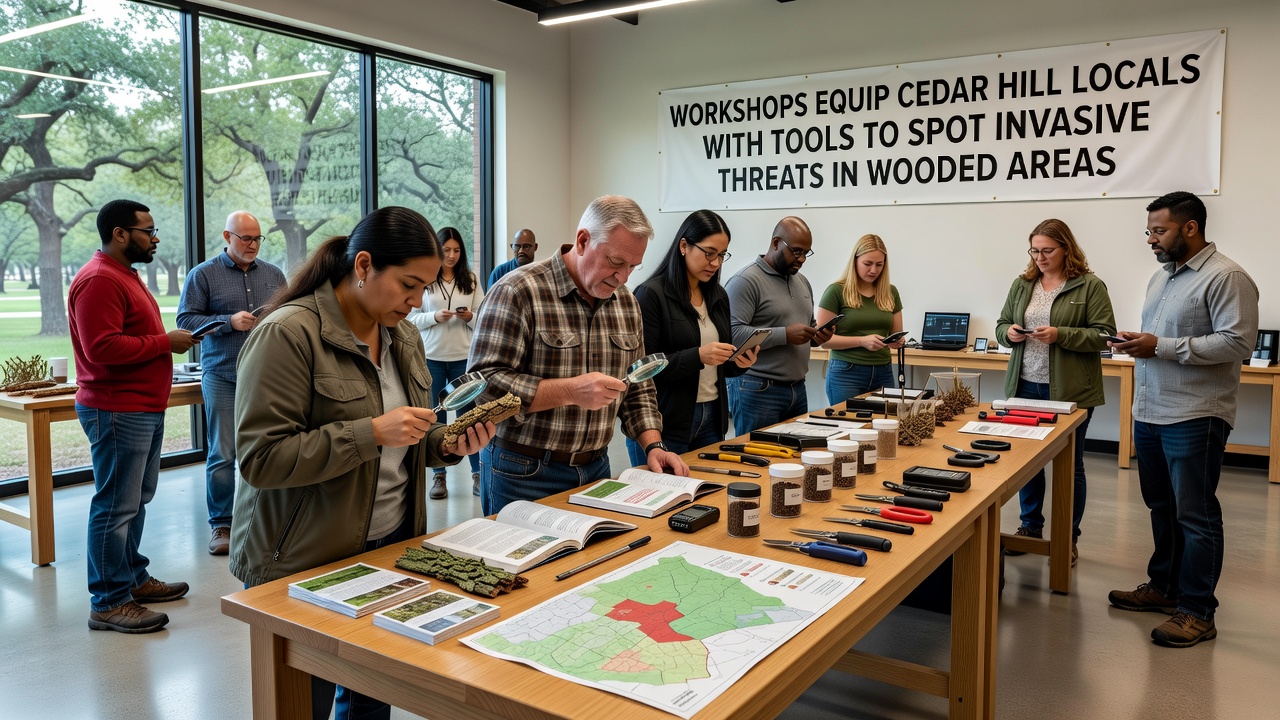
Community volunteers who complete the training often join monitoring groups that conduct quarterly surveys. These groups document changes along fixed transects and share updates at monthly meetings. The approach mirrors programs run by forestry agencies in other parts of North America, where citizen reports have accelerated response times for new infestations.
Reporting and Follow-Up Procedures
Once participants identify a potential threat, they submit details through the city app or a dedicated hotline. Staff verify sightings within 48 hours and determine whether professional removal is required. In cases where the species matches patterns documented in the European Alien Species Information Network, local teams consult additional resources for best practices. This verification step prevents false alarms while ensuring genuine threats receive prompt attention.
Workshops also cover legal aspects, including city ordinances that restrict transport of certain plant materials. Attendees receive copies of the relevant regulations and learn how to dispose of collected samples safely. The training stresses that individual actions contribute to larger containment efforts coordinated between municipal crews and state forestry personnel.
Community Outcomes and Data Collection
Since the program began, recorded sightings of three high-priority species have increased by 40 percent compared with the previous two years, according to city records. This rise reflects greater awareness rather than accelerated spread, because most new reports occur in areas already surveyed by trained volunteers. The resulting dataset helps planners allocate resources for targeted removal before infestations expand into adjacent residential zones.
Schools in the district have incorporated simplified versions of the training into science curricula, allowing students to participate in supervised field days. These youth sessions use age-appropriate materials and focus on observation skills that align with state environmental education standards. Teachers report that the hands-on format improves retention of concepts related to ecosystems and species interactions.
Conclusion
The workshops continue to evolve based on participant feedback and new scientific updates. Future sessions will incorporate drone imagery for large-scale surveys and partner with nearby universities to analyze collected data. Cedar Hill residents who complete the training gain skills that support ongoing forest stewardship across the region, and the structured approach ensures consistent reporting that benefits both local and broader management strategies.