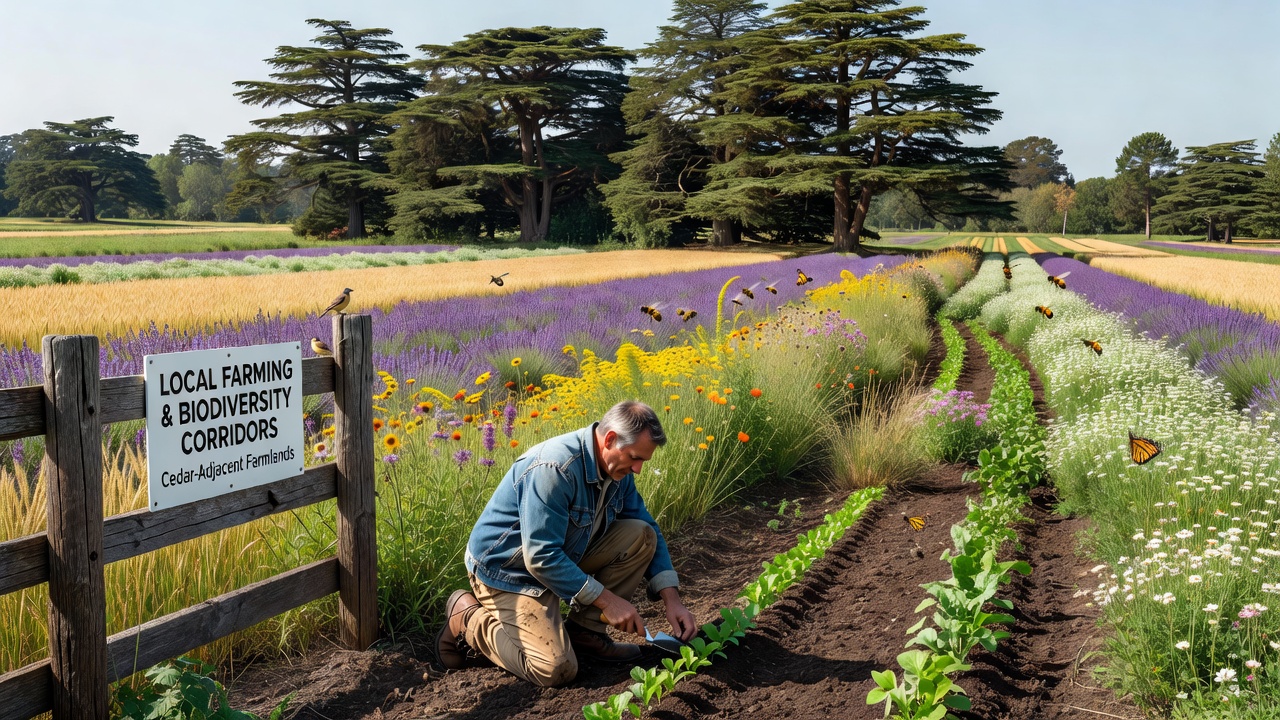
Frankie Braun · 13 September 2026
The Interplay Between Local Farming Techniques and Biodiversity Corridors in Cedar-Adjacent Farmlands
Local farming techniques in cedar-adjacent farmlands have evolved alongside efforts to maintain biodiversity corridors that connect fragmented habitats across agricultural landscapes, and researchers continue to examine how these practices influence species movement, soil health, and ecosystem resilience in regions where cedar woodlands border cultivated land. Data from multiple studies show that techniques such as rotational grazing, cover cropping, and reduced tillage help preserve narrow strips of native vegetation that function as corridors for pollinators, small mammals, and birds traveling between wooded patches and open fields.
Understanding Biodiversity Corridors in Agricultural Settings
Biodiversity corridors in cedar-adjacent farmlands consist of linear habitats that include hedgerows, riparian buffers, and uncultivated field margins, and these features allow wildlife to traverse areas otherwise dominated by monoculture crops or pasture. Observers note that when farmers maintain these corridors through selective mowing or native plantings, they support gene flow among isolated populations while also providing ecosystem services such as pest control and water filtration that benefit the surrounding agricultural operations.
Studies conducted across similar landscapes indicate that corridors wider than 30 meters tend to sustain higher species diversity, whereas narrower strips still offer functional connectivity for certain insects and amphibians, and this variation depends on the specific farming methods employed on adjacent plots.
Local Farming Techniques and Their Effects
Techniques like integrated pest management and agroforestry have gained traction in cedar-adjacent areas because they reduce chemical inputs that can degrade corridor quality, and evidence from field trials demonstrates measurable improvements in soil organic matter when farmers alternate crops with deep-rooted species that stabilize corridor edges against erosion. Those who have studied these systems find that no-till practices combined with buffer strips decrease sediment runoff into nearby waterways, which in turn protects aquatic biodiversity that relies on clean corridors for seasonal migration.
Yet challenges remain when heavy machinery compacts soils near corridor boundaries, and data collected over multiple seasons reveal that timing of tillage and harvest plays a significant role in minimizing disturbance to nesting birds and foraging mammals that use the same strips.
Interactions Observed in Cedar-Adjacent Regions
In cedar-adjacent farmlands, the interplay between technique and corridor becomes especially clear during periods of drought or heavy rainfall, when well-managed buffers retain moisture and prevent flooding that would otherwise fragment habitats further. Research indicates that farms using rotational grazing maintain denser corridor vegetation compared with continuous grazing systems, and this difference translates into higher counts of ground-nesting species that move through the landscape along protected routes.
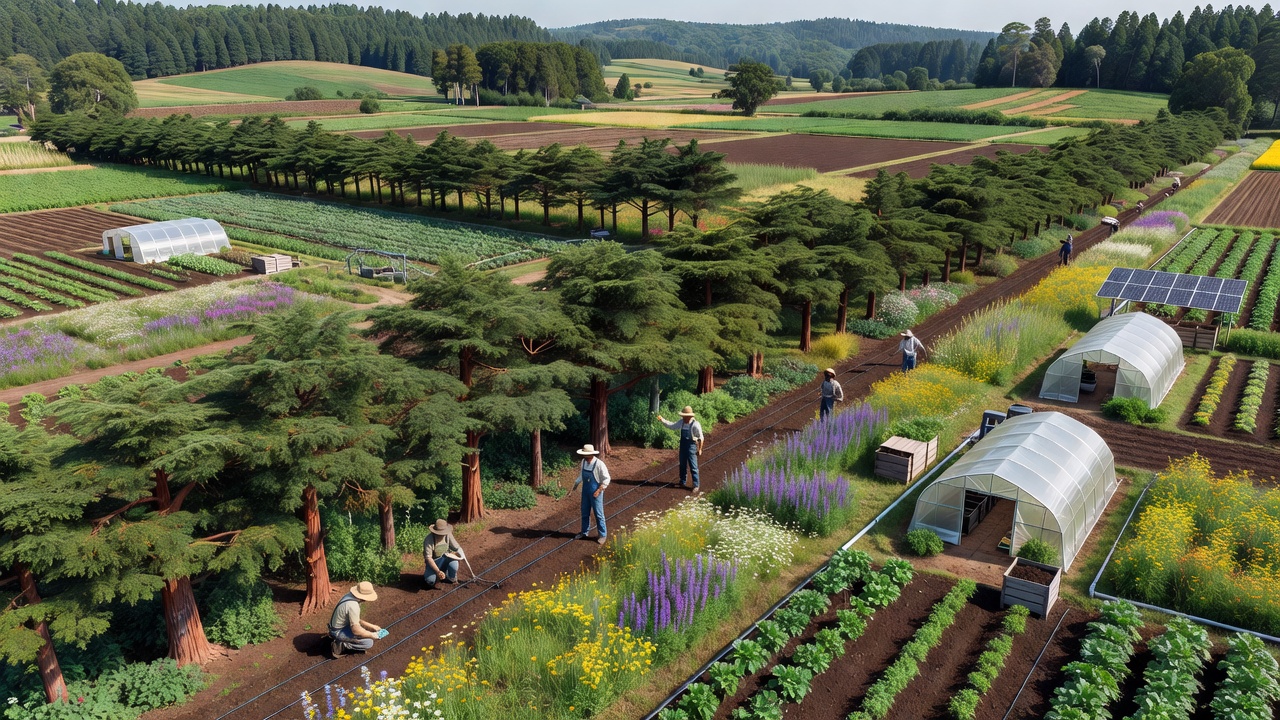
What's interesting is how these corridors also influence crop yields indirectly, because pollinators traveling along the strips reach interior field areas more reliably, and figures from monitoring programs show increased fruit set in orchards located within 200 meters of intact vegetation linkages.
Data and Regional Comparisons
According to reports from the Australian Department of Agriculture, Fisheries and Forestry, similar patterns appear in eucalyptus-adjacent farming zones where corridor preservation correlates with reduced herbicide use over time. Canadian research published through Environment and Climate Change Canada further highlights that maintaining at least 10 percent of farmland as corridor habitat supports stable populations of at-risk grassland birds in prairie-edge settings that share characteristics with cedar-adjacent zones.
In September 2026, updated mapping protocols from regional land-use agencies are scheduled to release new corridor connectivity metrics that will help farmers adjust techniques based on real-time species movement data collected via camera traps and acoustic sensors.
Future Considerations for Integrated Management
Long-term monitoring programs continue to track how shifts toward precision agriculture affect corridor integrity, and preliminary results suggest that targeted fertilizer application near corridor edges prevents nutrient runoff that could alter plant communities within those strips. Experts have observed that collaborative efforts among neighboring farms produce larger contiguous corridors than isolated actions, because connected networks allow species to bypass roads and irrigation channels that otherwise create barriers.
People involved in these initiatives often discover that financial incentives tied to habitat quality encourage wider adoption of practices that simultaneously boost both agricultural productivity and biodiversity metrics, and ongoing data collection will clarify which combinations yield the most consistent outcomes across varying soil types and cedar densities.
Conclusion
The relationship between local farming techniques and biodiversity corridors in cedar-adjacent farmlands rests on measurable interactions documented through repeated field observations and regional datasets, and continued refinement of methods such as buffer maintenance and timing of operations will determine how effectively these landscapes support both food production and ecological connectivity in the years ahead.