Blake Müller · 25 October 2026
Temperature Monitoring Reveals Cedar Stands' Role in Cooling Local Microclimates
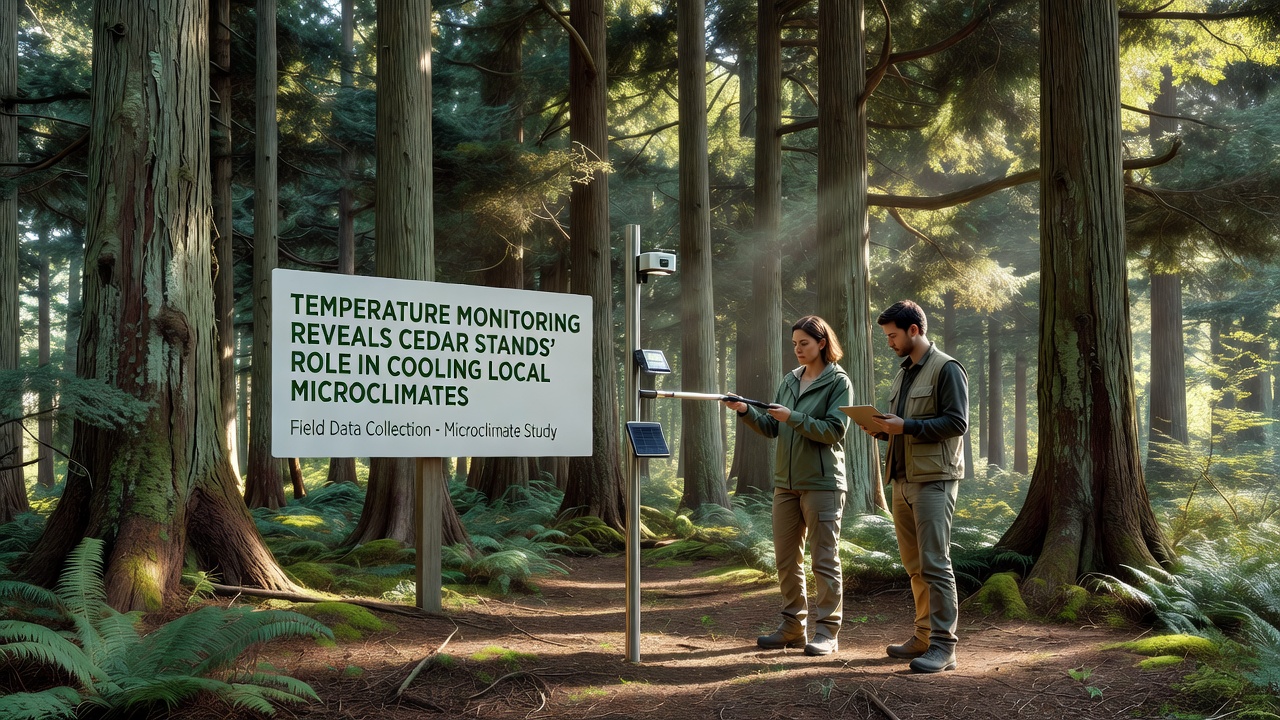
Continuous temperature data collected across Cedar Hill hillsides shows cedar stands maintain cooler conditions in surrounding areas compared to open terrain or deciduous zones, and researchers have tracked these patterns through sensor networks installed at multiple elevations since the early 2020s. Stations positioned inside dense cedar groves, at their edges, and in nearby clearings record hourly readings that highlight consistent temperature reductions of several degrees during peak summer months, with the effect extending outward into adjacent fields and residential zones.
Monitoring efforts intensified after initial pilot deployments in 2023, when local agencies partnered with regional universities to expand coverage, and by October 2026 the expanded network included more than 40 active sensors logging data across varied stand densities. Analysts compare these records against regional weather station outputs to isolate the influence of cedar canopy structure on air movement and moisture retention, revealing that stands with higher leaf area indices produce the most pronounced cooling gradients.
Monitoring Methods and Data Collection
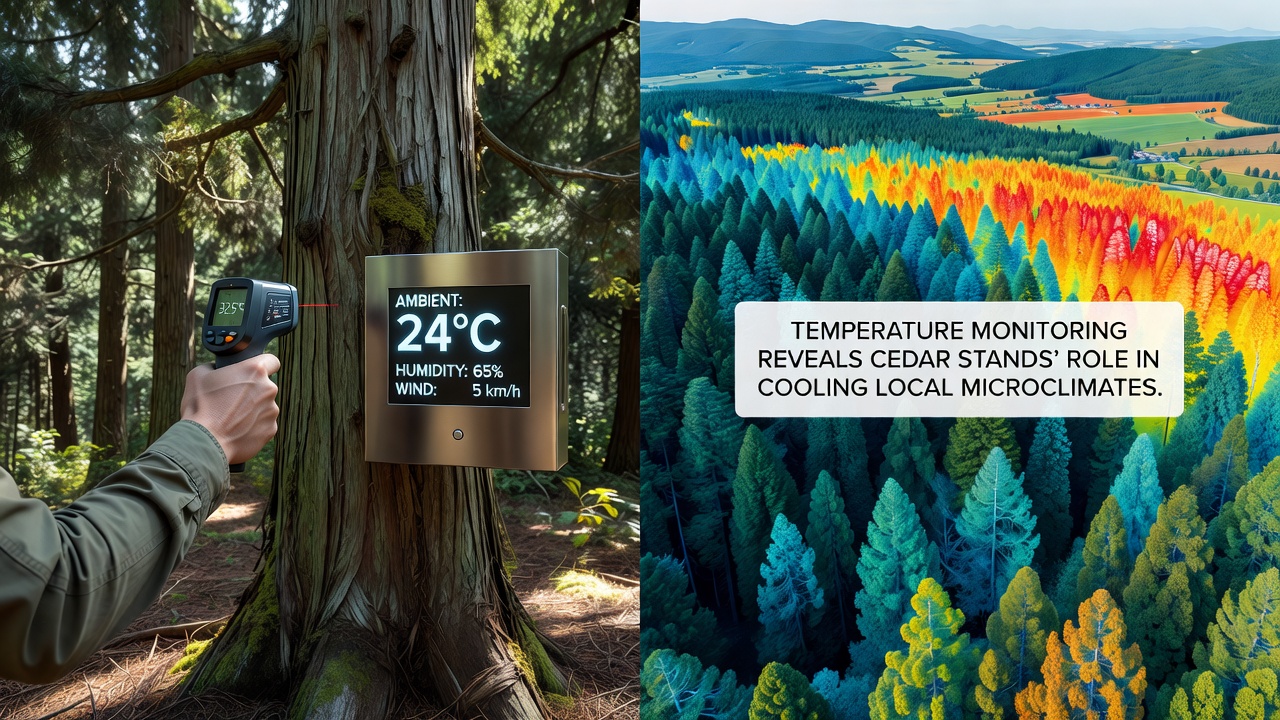
Researchers deploy shielded thermistors and data loggers at heights ranging from ground level to three meters, while additional probes measure soil temperature and relative humidity inside and outside the stands. Calibration occurs quarterly using portable reference instruments, and all readings feed into centralized databases that apply quality controls to remove outliers caused by equipment malfunction or extreme weather events. Data sets now span multiple growing seasons, allowing comparisons between drought years and wetter periods that demonstrate cedar stands buffer temperature swings even when precipitation falls below average.
Geographic information systems map sensor locations against canopy cover derived from aerial surveys, and statistical models then quantify how distance from the nearest cedar trunk correlates with temperature increase. These models incorporate wind speed measurements because air flow through the stands influences how far the cooled air travels before mixing with warmer surroundings.
Observed Temperature Patterns
Analysis of four years of records indicates that interior stand temperatures average 2.8 degrees Celsius lower than open sites at midday during July and August, while edge zones show intermediate values that decline gradually over distances of 50 to 150 meters. Nighttime data reveal smaller but still measurable differences, with cedar areas retaining slightly more warmth than exposed fields because the canopy reduces radiative heat loss. Seasonal shifts appear as well: spring and fall transitions show muted cooling effects, whereas winter inversions occasionally trap cooler air within the stands for extended periods.
What's interesting is how these patterns hold across different stand ages and management histories, and observers note that even younger plantations begin to exhibit measurable microclimate influence once canopy closure exceeds 60 percent. Figures from the network also show reduced vapor pressure deficit inside the stands, which supports lower evapotranspiration rates from understory plants and contributes to overall moisture conservation in the local system.
Mechanisms Driving the Cooling Effect
Evapotranspiration from cedar foliage releases water vapor that absorbs heat during phase change, while the dense branching intercepts incoming solar radiation before it reaches the forest floor. Soil moisture held within the stand further moderates temperature because water has high specific heat capacity, and root systems channel subsurface water upward during dry spells. Wind tunnel studies conducted by forestry research groups confirm that cedar canopies create turbulence patterns that mix cooler air downward, extending the cooled zone beyond the physical boundary of the trees themselves.
According to US Forest Service research summaries, similar processes operate in other conifer systems, yet cedar's particular needle morphology and year-round foliage retention amplify the effect in temperate hill environments. Soil temperature probes buried at 10 and 30 centimeter depths inside the stands register slower warming rates in spring, which delays heat release back into the air column during early summer.
Broader Local and Regional Implications
Communities downwind of major cedar stands experience measurable moderation in heat stress days, and agricultural operators note that crops planted within 200 meters of stand edges require less irrigation during heat waves. Wildlife surveys conducted alongside the temperature work document shifts in species activity patterns that align with the cooler, moister pockets, although those ecological connections fall outside teh scope of the climate monitoring itself. Urban planners in the Cedar Hill area now reference the sensor maps when evaluating new development proposals, because preserving or expanding cedar cover can offset some urban heat island contributions.
Cross-referencing with regional climate models shows that projected warming trends may intensify the relative value of these microclimate refugia, and October 2026 updates to the monitoring program added sensors at higher elevations to track whether the cooling benefit scales with altitude. International forestry databases, including those maintained by Natural Resources Canada, contain comparable records from British Columbia cedar forests that support the same directional findings, although local soil and topography produce site-specific magnitudes.
Conclusion
Long-term temperature monitoring continues to document how cedar stands function as localized cooling features, with data extending through October 2026 confirming consistent patterns across seasons and stand conditions. The combination of canopy shading, evapotranspiration, and altered air flow creates measurable temperature reductions that influence both natural and human-modified landscapes. Future expansions of the sensor network aim to refine distance-decay functions and integrate real-time alerts for heat events, while ongoing analysis compares cedar performance against other tree species in the same region to identify optimal configurations for microclimate management.